












WFISD ATHLETICS
CONCUSSION POLICY
Definition of a Concussion: A complex pathophysiological process affecting the brain caused by a traumatic physical force or impact to the head or body, which may;
a. Include temporary or prolonged altered brain function resulting in physical, cognitive, or emotional symptoms or altered sleep patterns; and
b. Involved loss of consciousness
Prevention: Teach and practice safe play and proper technique, follow the rules of play, make sure the required protective equipment is worn for all practices and games, protective equipment must fit properly and be inspected on a regular basis.
Signs and Symptoms of a Concussion: A concussion can produce a wide variety of symptoms. The signs and symptoms of a concussion may include but are not limited to: Headache, Appears to be Dazed or Stunned, Ringing in the Ears, Fatigue, Slurred Speech, Nausea or Vomiting, Balance Problems, Dizziness, Double/Fuzzy Vision, Sensitivity to Light or Noise, Feeling Sluggish or Foggy, Concentration or Memory Problems, Confusion, Unequal Pupils.
Oversight: Each district shall appoint and approve a Concussion Oversight Team (COT). The COT shall include at least one physician and an athletic trainer if one is employed by the school district. Other members may include: Advanced Practice Nurse, Chiropractor, Physical Therapist, Neuropsychologist, or Physician’s Assistant. The COT is charged with developing the Return to Learn and Return to Play protocol based on peer reviewed scientific evidence.
Return to Play following a Concussion: A student from an interscholastic athletics practice or competition under TEC Section 38.156 (suspected of having a concussion) may NOT be permitted to practice or compete again following the force of impact or impact believed to have caused the concussion until:
1. The student has been evaluated; using established protocols based on peer-reviewed scientific evidence, by a treating physician chosen by the student or students parent/guardian or by a person with legal authority to make medical decisions for the student
2. The student has successfully completed each requirement of the return to play protocol established under TEC Section 38.153
3. The treating physician has provided a written statement indicating that in the physicians professional judgment it is safe for the student to return to play
4. The student and the students parent/guardian or person with legal authority to make medical decisions for the student:
a. Have acknowledged that the student has completed the requirements of the return to play protocol
b. Have provided the treating physician's written statement under subdivision (3) to the person responsible for compliance with the return to play protocol
c. Having signed a consent form indicating the person signing:
i. Has been informed and consents to the student participating in return to play in accordance with the return to play protocol
ii. Understands the risks associated with the student returning to play and will comply with any ongoing requirements in the return to play protocol
iii. Consents to the disclosure to appropriate persons, consistent with the Health Insurance Portability and Accountability Act of 1996 (HIPAA) of the treating physician's written statement under subdivision (3) and, if any the return to play recommendations of the treating physician
iv. Understands the immunity provisions under TEC Section 38.159
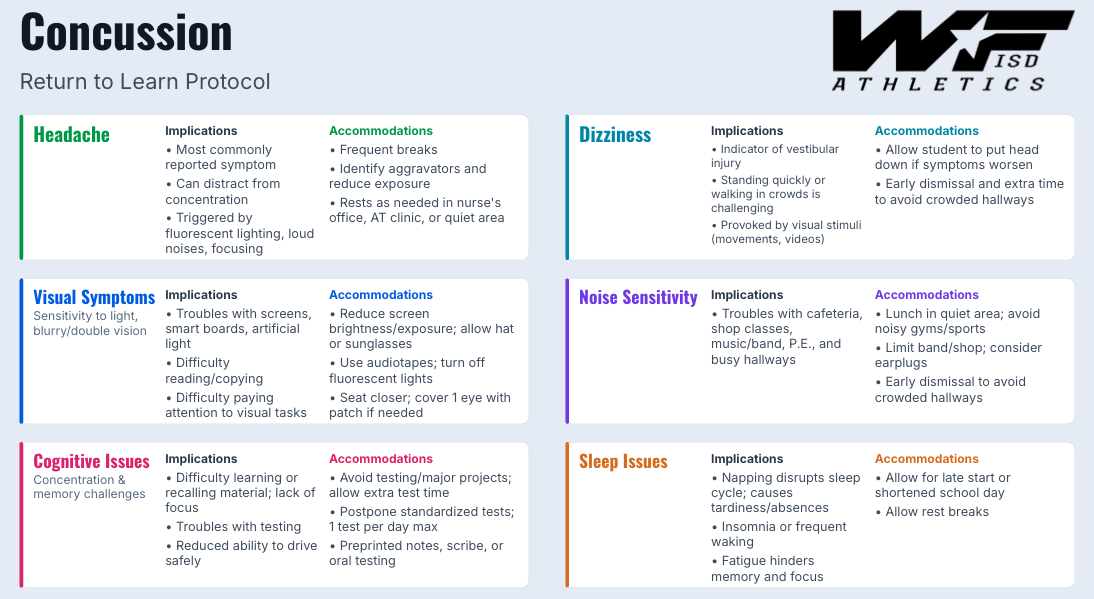
*Any student(s) with symptoms lasting longer than 1 month may benefit from a more detailed assessment by a concussion specialist (licensed physician, such as neurologist, primary care sports medicine specialist or a neurosurgeon with expanded knowledge and experience in concussion management).
Students must be performing at their academic “baseline” before returning to full sport activity.
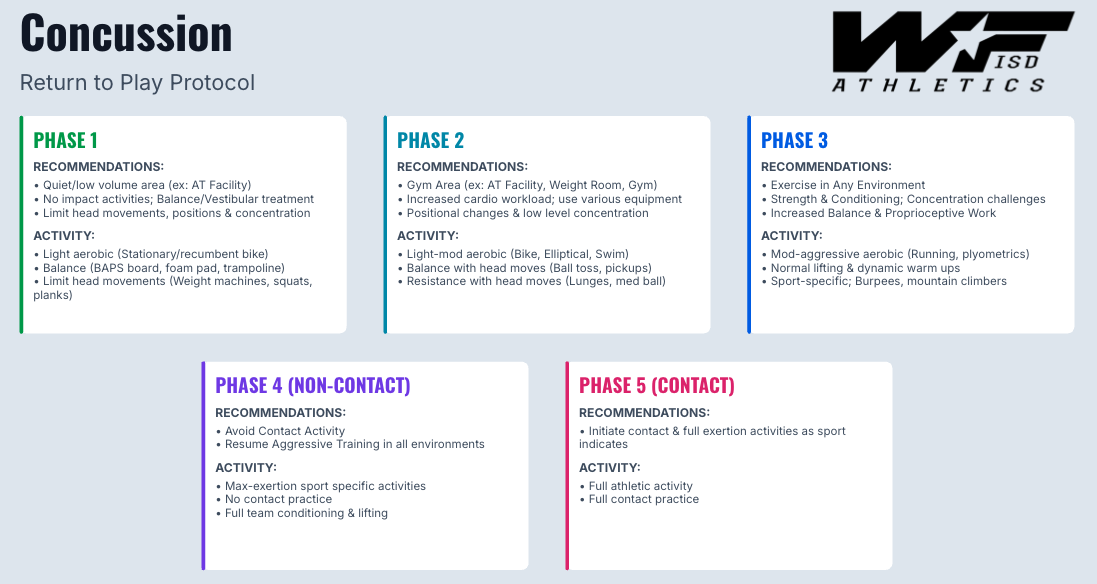
***Depends on sport specifics (ie. swim, golf, track, tennis, cheer, dance, band)
Subsequent Concussions: Any subsequent concussions require further medical evaluation, which must include a physical examination prior to returning to participation. Written clearance from a physician is required as outlined in TEC Section 38.157 before any participation in UIL practices, games, or matches.